
| Company | Investment/Organization | Target | Industry | Key Customers | Date |
|---|---|---|---|---|---|
| Samsung Electronics | GSMA (Global Mobile Awards) | ‘Galaxy S26 Ultra‘ premium smartphone | Mobile Communications, Consumer Electronics, Semiconductors | Global consumers, Enterprise & Government sectors | MWC 2026 |
| GSMA | N/A | Recognition of industry innovation | Telecommunications Industry Association | Global mobile operators and ecosystem participants | MWC 2026 |
1. The Structural Problem
The premium smartphone market has reached a state of deep maturity, characterized by decelerating replacement cycles and intense margin pressure. For over a decade, the primary vectors of competition have been incremental advancements in camera optics, display resolution, and processing speed—metrics that now yield diminishing returns on user-perceived value. This has led to a precarious commoditization at the high end, where escalating component costs and R&D expenditures are no longer reliably offset by corresponding increases in Average Selling Price (ASP). Original Equipment Manufacturers (OEMs) are caught in a strategic vise: the capital expenditure required to innovate at the hardware level is immense, yet the resulting differentiation is often fleeting and easily replicated by competitors within a single product cycle. This dynamic has compressed operating margins and forced a strategic pivot towards software and services, yet success in that domain remains contingent on establishing a uniquely defensible hardware and software ecosystem—a challenge that has proven structurally difficult for most players in the Android landscape.
2. Technical & Economic Analysis
The accolade awarded to Samsung Electronics‘ Galaxy S26 Ultra at MWC 2026 is less about the award itself and more a validation of a multi-year strategic pivot towards vertical integration as a solution to the industry’s structural margin problem. The device’s key features are not merely incremental upgrades; they represent a calculated realignment of Samsung‘s cost structure, value proposition, and competitive positioning.
Proprietary AI Chipset: A Shift from Component Assembler to Integrated Architect
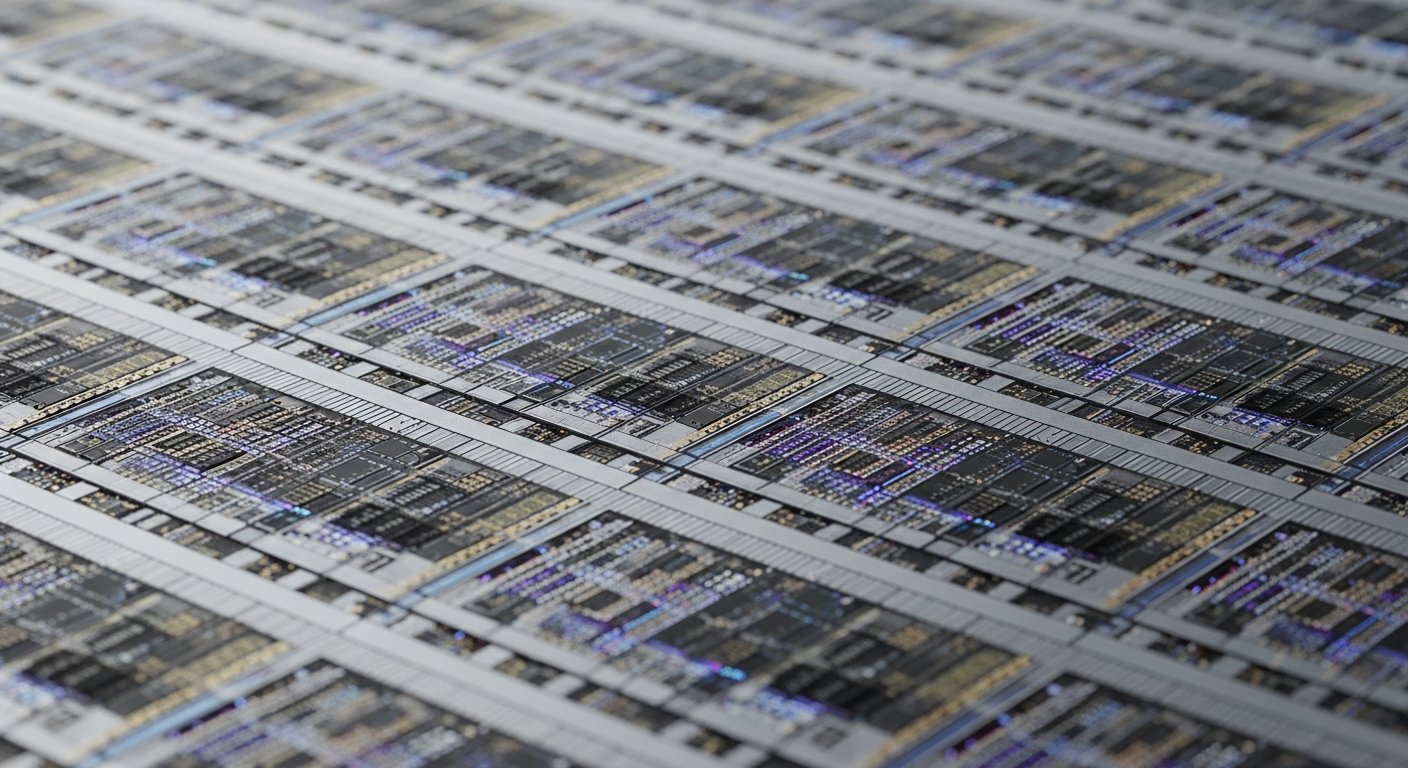
The deployment of a “Galaxy-exclusive chipset” is the central pillar of this strategy. For years, premium Android OEMs have relied heavily on third-party silicon providers, creating a level playing field on core processing but also a shared cost structure and innovation bottleneck. By developing its own application processor optimized for its “Galaxy AI” software stack, Samsung achieves several critical economic advantages:
- COGS Reduction & Margin Control: While initial R&D investment is substantial, in-house silicon design provides long-term control over a key component of the bill of materials (BOM). This insulates Samsung from the pricing power of sole-source suppliers like Qualcomm and allows for margin optimization. Over the product lifecycle, this can translate into several hundred basis points of improvement in gross margin for the MX (Mobile eXperience) division.
- Performance-per-Watt Optimization: On-device AI processing is an energy-intensive task. A custom chipset allows for deep optimization of the hardware-software interplay, maximizing AI performance while minimizing battery drain. This is a critical factor for user experience and a defensible feature that cannot be replicated by competitors using off-the-shelf chips with a generic Android build.
- Accelerated Innovation Cycle: Owning the silicon roadmap allows Samsung to align hardware and software development, enabling faster deployment of advanced AI features. This breaks the dependency on third-party chip release schedules and creates a proprietary ecosystem where the “agentic AI” capabilities mentioned by company leadership can be more deeply integrated.
‘Privacy Display’: Targeting High-Value Enterprise & Prosumer Segments
The introduction of the world’s first ‘Privacy Display’ is a shrewd strategic move beyond the consumer market. While it offers a clear benefit to individual users, its primary economic impact lies in its appeal to enterprise, government, and security-conscious professional clients.
- TAM Expansion and ASP Elevation: This feature directly addresses the risk of “visual hacking” in public and corporate environments—a significant concern for sectors like finance, legal, healthcare, and government. By providing a hardware-level security feature, Samsung can more effectively penetrate the lucrative enterprise and BYOD (Bring Your Own Device) markets, which are historically less price-sensitive and have longer, stickier contract cycles. This provides a credible justification for a higher ASP, directly boosting revenue and profitability per unit.
- Defensible Differentiation: Unlike a software feature, a novel display technology is a hardware-based moat that is difficult and costly for competitors to replicate quickly. It creates a clear, tangible reason for a high-value customer to choose a Samsung device over a competitor, shifting the purchasing decision from price to a specific, unmet security need. This strengthens Samsung’s position in tenders for large corporate and government accounts.
In aggregate, the technical architecture of the Galaxy S26 Ultra translates directly into a more resilient business model. The custom chipset attacks the cost side of the equation while enabling a software-driven ecosystem, whereas the Privacy Display fortifies the revenue side by unlocking pricing power and access to higher-margin market segments.
3. Market & Investment Implications
The strategic direction embodied by the Galaxy S26 Ultra, as recognized at MWC 2026, will catalyze significant shifts in competitive dynamics and capital allocation within the mobile technology sector. Samsung’s deepened vertical integration poses a direct and formidable challenge to its primary competitors, forcing a market-wide re-evaluation of strategy.
- Intensified Pressure on Competitors: The most immediate impact will be felt by other Android OEMs. Competitors relying on standardized components will find it increasingly difficult to compete on the performance and efficiency of on-device AI. They are now at a structural disadvantage, forced to either accept a lower-performance tier or increase their dependency on and payments to chip designers who may not be able to offer the same level of hardware-software co-optimization. Apple, long the exemplar of vertical integration, now faces a competitor mirroring its most effective strategy. The battleground for premium market share will increasingly be fought on the capabilities of proprietary silicon and the AI-driven services they enable.
- Validation of Samsung’s Internal Synergies: This development is a major validation for the synergy between Samsung’s MX (Mobile) and LSI (Semiconductor) divisions. For investors, it signals that the conglomerate’s vast R&D expenditure in semiconductor design is yielding tangible, market-leading products that enhance the profitability of its consumer-facing divisions. This successful integration could lead to a positive re-rating of the company, as the market prices in the long-term margin and moat advantages of this strategy.
- Shifting Investor Metrics: The focus for evaluating Samsung’s mobile business will necessarily evolve. While unit shipments remain important, more sophisticated metrics will gain prominence. Investors should now closely monitor the ASP of the premium smartphone portfolio, the growth in enterprise market share, and the attach rates for any future AI-driven subscription services. The success of the “agentic AI phone” will not be measured in sales alone, but in its ability to increase user Lifetime Value (LTV) and create a stickier, more profitable ecosystem. Capital is likely to favor companies demonstrating a clear, executable strategy for vertical integration in the AI era.
4. Strategic FAQ (High-CPC Intent)
Q1: What is the potential impact of the Galaxy-exclusive AI chipset on Samsung’s operating margins and supply chain risk?
The adoption of a proprietary AI chipset is a strategic lever for significant margin enhancement and risk mitigation. Economically, it directly impacts the bill of materials (BOM), potentially reducing COGS by internalizing the margin previously paid to external suppliers. While the initial non-recurring engineering (NRE) costs are high, at scale, the per-unit cost of an in-house chip is typically lower than purchasing a flagship-tier processor from a third party. This could translate to a 2-4% improvement in gross margin on high-end devices. Strategically, it de-risks the supply chain by reducing dependence on a single external partner, granting Samsung greater control over production schedules, inventory, and future technology roadmaps, which is critical in a geopolitically sensitive semiconductor landscape.
Q2: How does the ‘Privacy Display’ feature translate into a tangible increase in Average Selling Price (ASP) and enterprise market share?
The ‘Privacy Display’ is a classic “value-add” feature designed to justify a price premium and penetrate specific high-value markets. For the enterprise and government sectors, data security is not a luxury but a core operational requirement. This feature allows Samsung to position the S26 Ultra as a superior solution for secure mobile computing, directly competing for contracts where security protocols are a primary decision factor. This can support a $50-$100 ASP uplift compared to models without such a feature. More importantly, it can unlock large-volume corporate sales, potentially increasing Samsung’s share in the global enterprise mobile market, a segment where purchase decisions are based on total cost of ownership and security compliance rather than consumer price sensitivity.
Q3: Beyond unit shipments, what are the key performance indicators (KPIs) to monitor for the success of Samsung’s “agentic AI” strategy?
To accurately assess the ROI on Samsung’s AI strategy, investors must look beyond traditional hardware metrics. The key KPIs to monitor include: 1) Ecosystem Engagement: Track metrics like the daily/monthly active usage of exclusive Galaxy AI features. This indicates the stickiness of the software. 2) Services Revenue Growth: Monitor the attach rate and revenue from any premium AI services or subscriptions introduced on the platform. This signals the transition to a recurring revenue model. 3) User Retention / Churn Rate: A successful AI ecosystem should demonstrably lower the rate at which users switch to competing brands during upgrade cycles. A year-over-year decrease in churn within the Galaxy S user base would be a strong positive indicator. 4) Enterprise Penetration Rate: Measure the percentage of S26 Ultra sales going to corporate and government channels as a proxy for the success of features like the Privacy Display.
5. CTA: Legal Disclaimer
Disclaimer: This article is for informational purposes only and focuses on technological trends and industry developments. It does not constitute medical advice, diagnosis, or treatment, nor does it constitute investment advice or recommendations. Always seek the advice of a qualified health provider with any questions you may have regarding a medical condition. Consult with qualified financial professionals before making investment decisions. Company claims and figures are reported as stated in source materials and should be independently verified.